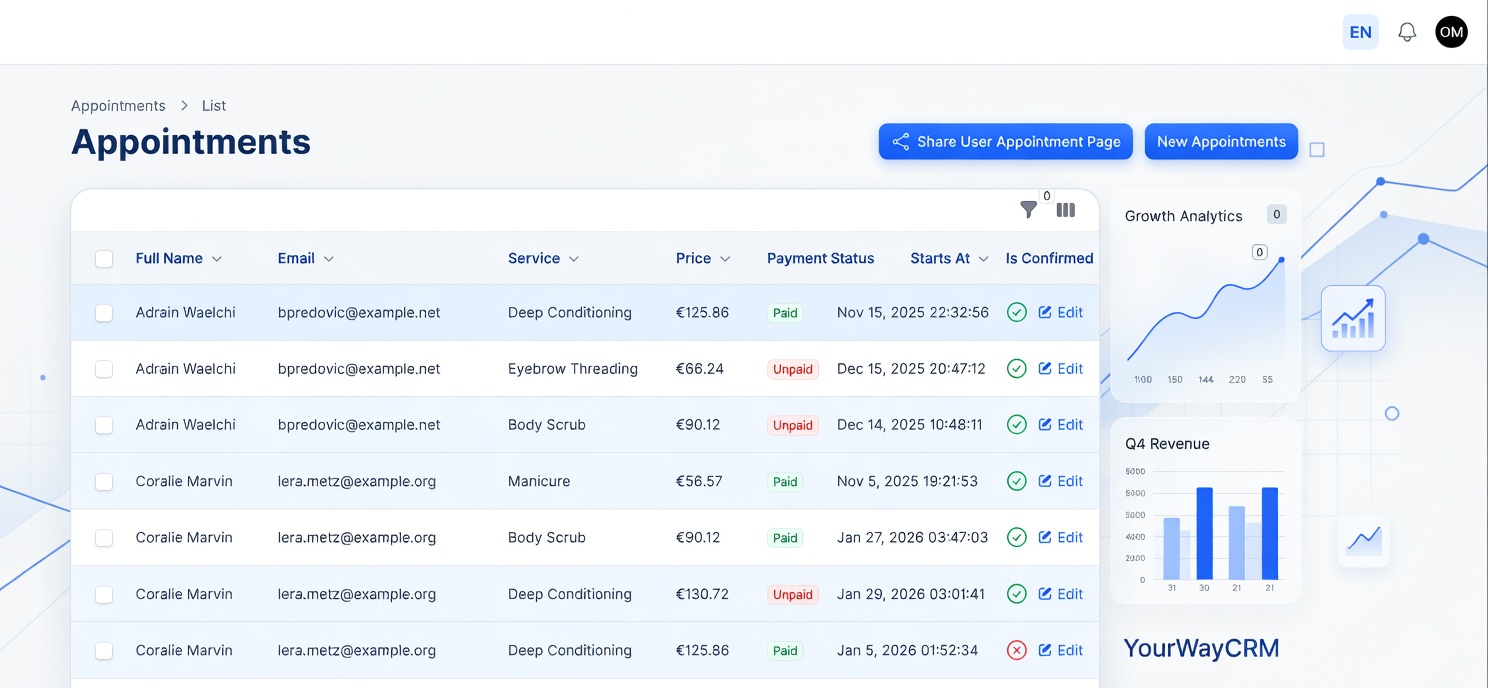
How CRM Helps with Marketing Automation
Marketing automation has become essential for small businesses looking to compete in today's digital landscape. When combined with a robust Customer Relationship Management (CRM) system, marketing automation transforms how you nurture leads, engage customers, and drive sales. In this guide, we'll explore how CRM-powered marketing automation can revolutionize your business growth.
What is Marketing Automation in a CRM?
Marketing automation within a CRM refers to the use of technology to automatically execute repetitive marketing tasks and workflows. Instead of manually sending emails, following up with leads, or segmenting your audience, a CRM system handles these tasks intelligently based on customer behavior and predefined rules.
A platform like YourWayCRM integrates marketing automation seamlessly, allowing you to create sophisticated campaigns without requiring a dedicated marketing team. This means more leads nurtured, more customers engaged, and more revenue generated—all while you focus on other aspects of your business.
Key Benefits of CRM Marketing Automation
Save Time and Resources
One of the most immediate benefits of marketing automation is time savings. Instead of manually sending follow-up emails to every lead, your CRM can automatically send personalized messages at the right time. This frees up your team to focus on high-value activities like closing deals and building relationships.
Improve Lead Nurturing
Not every lead is ready to buy immediately. Marketing automation helps you nurture leads through the sales funnel with targeted, timely content. Your CRM can automatically send educational materials, product information, and special offers based on where each lead is in their buyer journey.
Increase Conversion Rates
By delivering the right message to the right person at the right time, marketing automation significantly improves conversion rates. Personalized, automated workflows ensure no lead falls through the cracks and that each prospect receives relevant information that moves them closer to a purchase decision.
Enhance Customer Experience
Automation doesn't mean impersonal. Modern CRM systems create highly personalized experiences by using customer data to tailor communications. Customers receive messages that speak directly to their needs and interests, resulting in better engagement and loyalty.
How CRM Marketing Automation Works
The power of CRM marketing automation lies in its ability to create intelligent workflows. Here's how the process typically works:
- Lead Capture: New leads enter your CRM through various channels—website forms, landing pages, or manual entry.
- Segmentation: The CRM automatically segments leads based on characteristics like industry, company size, or engagement level.
- Triggered Actions: When a lead meets certain criteria, automated workflows are triggered. For example, a new lead might automatically receive a welcome email series.
- Behavior Tracking: The CRM monitors customer actions like email opens, link clicks, and website visits.
- Dynamic Content: Based on behavior and preferences, customers receive personalized content and offers.
- Lead Scoring: The system automatically scores leads based on engagement, helping your sales team prioritize hot prospects.
Real-World Marketing Automation Scenarios
Welcome Series for New Subscribers
When someone subscribes to your email list, a multi-email welcome series automatically deploys. Each email is timed strategically and builds on the previous message, introducing your brand and establishing credibility.
Re-engagement Campaigns
If a customer hasn't engaged with your business in months, an automated re-engagement campaign can be triggered. This might include a special offer or a "we miss you" message designed to rekindle interest.
Post-Purchase Follow-up
After a customer makes a purchase, automated workflows can deliver order confirmations, shipping updates, and follow-up surveys—all without manual intervention.
Event-Based Marketing
When a customer takes a specific action—like downloading a resource or attending a webinar—automated workflows can deliver relevant next-step content tailored to that action.
Essential Features to Look for in a CRM
Not all CRM systems offer the same level of marketing automation. When evaluating options, look for:
- Email automation with personalization capabilities
- Lead scoring and qualification tools
- Workflow automation with conditional logic
- Detailed analytics and reporting
- Integration with your existing marketing tools
- User-friendly interface that doesn't require coding
- Mobile accessibility for on-the-go management
YourWayCRM includes all these features, making it an ideal choice for small businesses looking to implement marketing automation without complexity or excessive cost.
Getting Started with CRM Marketing Automation
Implementing marketing automation doesn't have to be overwhelming. Start small by identifying your most common marketing tasks—like welcome emails or lead follow-ups. Create simple workflows for these tasks, then expand as you become more comfortable with the system.
Begin by mapping out your customer journey and identifying key touchpoints where automation can add value. Then, use your CRM to build workflows that guide customers through these stages automatically.
Conclusion
CRM marketing automation is no longer a luxury reserved for large enterprises—it's an essential tool for small business success. By automating repetitive marketing tasks, nurturing leads more effectively, and delivering personalized customer experiences, you can drive significant growth without expanding your team.
The combination of CRM and marketing automation empowers small business owners to compete at scale, convert more leads, and build lasting customer relationships. Start exploring how automation can transform your marketing efforts today.