How CRM Helps You Avoid Losing Deals to Competitors
In today's fast-paced business environment, losing deals to competitors is a frustration that keeps many small business owners up at night. The difference between winning and losing often comes down to one simple factor: organization and follow-up. This is where a Customer Relationship Management (CRM) system becomes your competitive advantage. A CRM doesn't just store customer information—it actively helps you stay ahead of the competition by ensuring no opportunity slips away.
The Cost of Lost Deals
Before diving into solutions, let's acknowledge the real impact of losing deals. When a prospect chooses your competitor instead of you, you're not just losing a single transaction. You're losing potential repeat business, referrals, and lifetime customer value. Many small businesses lose deals not because their product or service is inferior, but because they lack the systems to stay organized and responsive. Prospects get lost in email threads, follow-ups are forgotten, and by the time you circle back, they've already signed with someone else.
Why CRM Systems Matter for Competitive Edge
A CRM system creates a centralized hub for all customer interactions and deal information. Instead of relying on memory, scattered emails, or disorganized spreadsheets, every team member has access to the same up-to-date information. This unified approach immediately gives you an advantage over competitors who operate with fragmented systems.
Centralized Information Access
When all your customer data lives in one place, you eliminate the chaos of multiple information sources. Every email, call note, meeting detail, and interaction history is recorded and accessible to your entire team. This means whether it's you, your sales manager, or a colleague following up, everyone knows exactly where that prospect stands in the sales pipeline. No more duplicate efforts, no more missed context, and no more "I didn't know about that conversation" moments.
Never Miss a Follow-Up Again
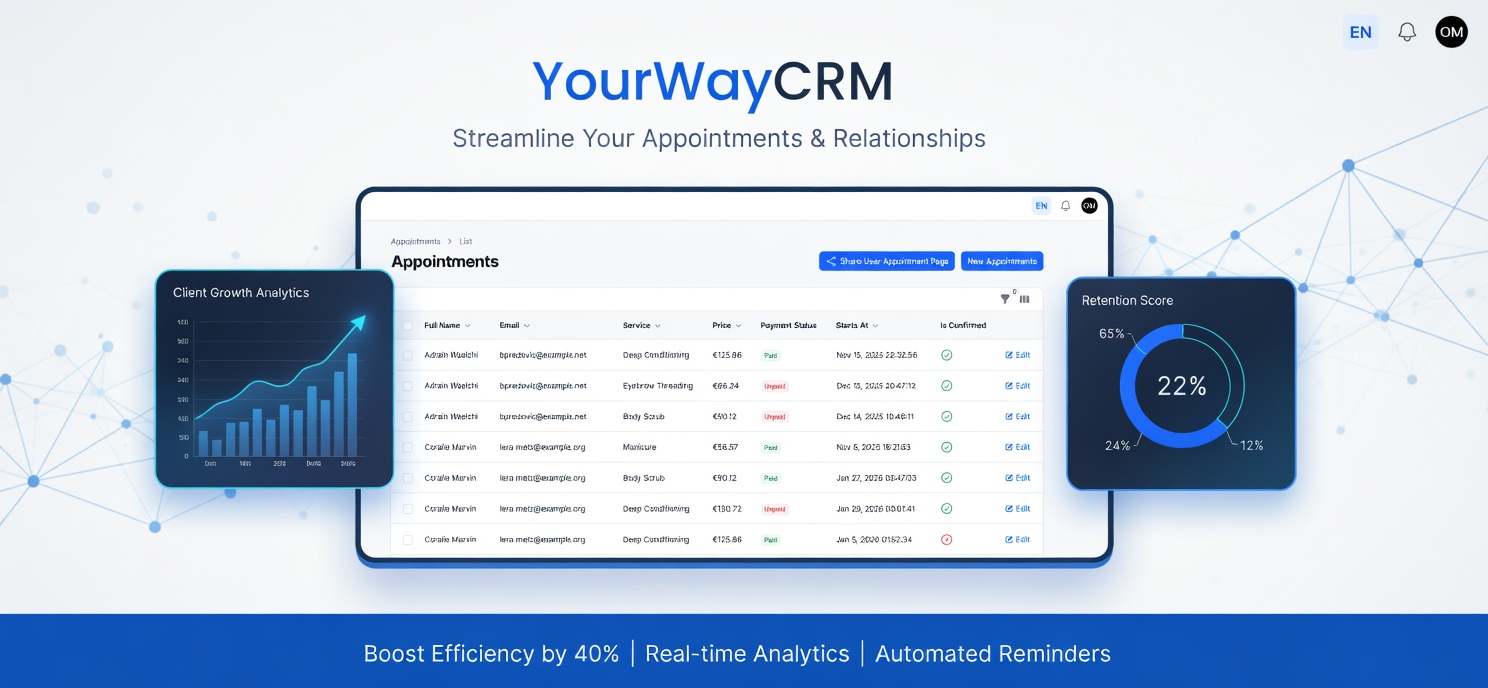
The biggest deal-killer is inconsistent follow-up. CRM systems like YourWayCRM come with built-in task management and automated reminders that ensure nothing falls through the cracks. You can set follow-up tasks, schedule email reminders, and track when interactions are due. Your team stays accountable, and prospects feel valued because they're consistently engaged.
Key Ways CRM Prevents You from Losing Deals
Lead Scoring and Prioritization
Not all leads are created equal. A good CRM helps you identify which prospects are most likely to convert so you can focus your energy accordingly. By tracking engagement metrics—email opens, website visits, content downloads—you can prioritize high-value leads and ensure your best efforts go toward the deals most likely to close. This means your team isn't wasting time on cold prospects while hot leads cool off.
Sales Pipeline Visibility
A CRM gives you complete visibility into your sales pipeline at any moment. You can see exactly which deals are in which stage, how long they've been there, and what actions are needed to move them forward. This transparency helps you identify bottlenecks before they cost you deals. If a prospect has been stuck in the same stage for weeks, you'll know it's time to take action.
Automated Workflows and Reminders
Manual processes are the enemy of consistency. CRM systems automate routine tasks like sending follow-up emails, scheduling reminders, and assigning tasks to team members. This automation ensures that every prospect receives timely communication without relying on someone remembering to reach out. Consistency builds trust, and trust wins deals.
Detailed Interaction History
Every conversation, email, and touchpoint with a prospect is logged in your CRM. This history gives you invaluable context for every interaction. You'll never be caught off-guard or repeat a question you've already asked. When your team has complete context, conversations feel personal and informed—qualities that competitors with disorganized systems simply can't match.
Performance Metrics and Forecasting
CRM systems provide insights into your sales performance, win rates, and deal velocity. These metrics help you understand what's working and what isn't. You can identify which sales strategies are most effective, which team members are closing deals fastest, and where improvements are needed. Data-driven decisions beat guesswork every time.
Real-World Impact for Small Businesses
For small business owners, the stakes are even higher than for large enterprises. You're competing against bigger companies with bigger budgets, so you need to be smarter and more responsive. A CRM levels the playing field by giving you the same organizational tools that enterprise companies use. YourWayCRM, designed specifically for small businesses, provides this competitive advantage without the complexity or cost of enterprise solutions.
Imagine this scenario: You're pursuing a mid-sized contract that could significantly impact your business. Your competitor is also in the running. With a CRM, you know exactly when to follow up, what the prospect's pain points are, and what your previous conversations covered. You respond within hours of a prospect inquiry, while your competitor takes days. You provide personalized solutions based on documented needs, while your competitor sends generic proposals. You win—not because your product is better, but because you're more organized and responsive.
Getting Started with CRM
The good news is that implementing a CRM doesn't require a massive overhaul of your business. Start by choosing a system designed for small businesses, ensure your team understands how to use it, and commit to consistent data entry. The investment in time upfront pays dividends in deals won and customers retained.
Conclusion
In a competitive market, losing deals to competitors often comes down to execution, not product quality. By implementing a CRM system, you create an organized, responsive sales process that keeps prospects engaged and ensures no opportunity is forgotten. The competitive advantage isn't just about having better tools—it's about using those tools to be more thoughtful, consistent, and customer-focused than your competition. That's how small businesses win.