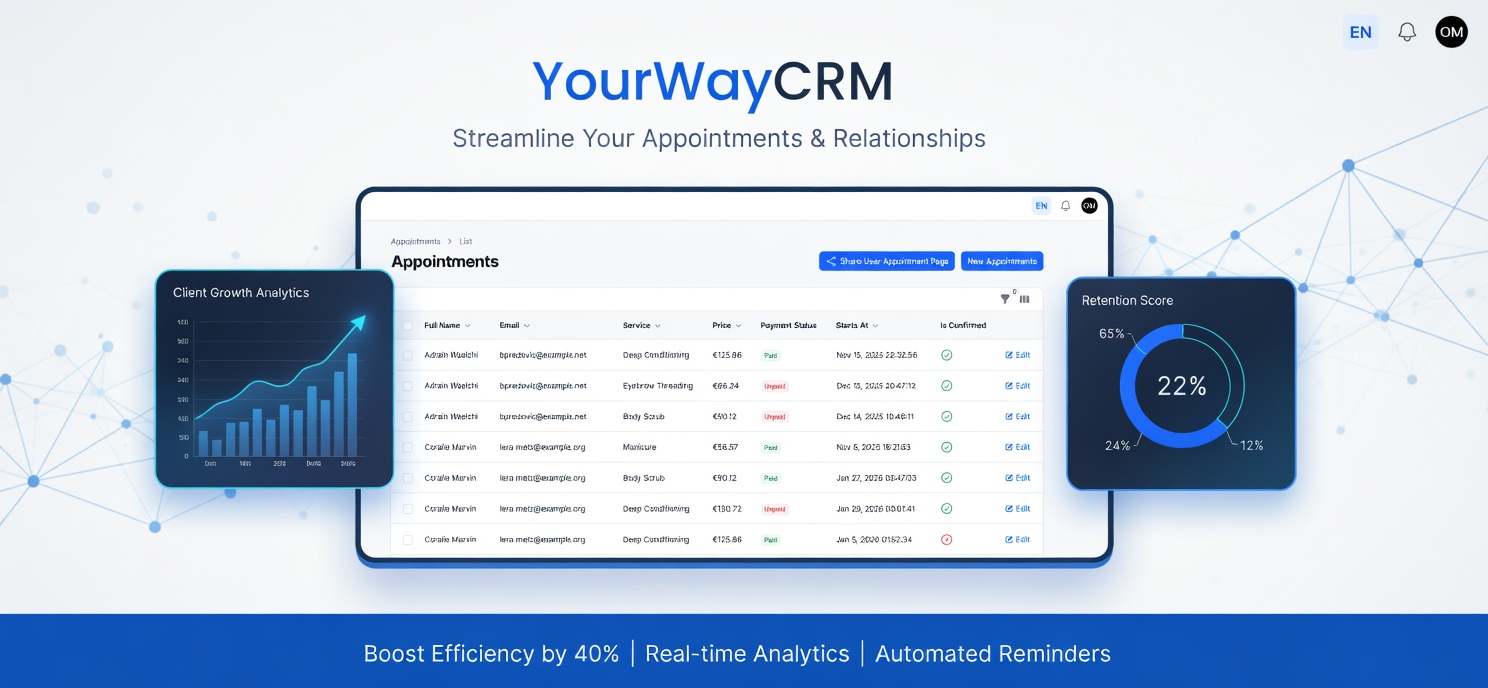
Using CRM Data to Close More Deals
Every small business owner wants to increase sales and close more deals. The secret? Your CRM data holds the key. Most entrepreneurs collect valuable customer information but fail to use it strategically. By analyzing and acting on the data already in your system, you can dramatically improve your conversion rates and revenue.
In this guide, we'll explore how to harness CRM data to identify opportunities, understand your customers better, and ultimately close more deals. Whether you're using YourWayCRM or another platform, these strategies will transform how you approach sales.
Understanding Your Sales Pipeline with CRM Data
Your CRM is more than a contact database—it's a goldmine of insights about your sales process. By examining pipeline data, you can identify bottlenecks, forecast revenue accurately, and prioritize high-value opportunities.
Start by analyzing where deals get stuck. Are prospects lingering in the negotiation stage? Do they drop off after the initial meeting? Your CRM data reveals these patterns. Once identified, you can adjust your approach. Maybe you need better follow-up sequences, clearer pricing information, or more compelling value propositions.
YourWayCRM allows you to track deal progression visually, making it easy to spot where improvements are needed. With this visibility, you'll spend less time guessing and more time acting strategically.
Identifying High-Value Prospects
Not all leads are created equal. Your CRM data can help you identify which prospects are most likely to convert and which deals will generate the highest revenue.
Look for patterns in your closed deals. What characteristics do your best customers share? Are they in specific industries? Do they have particular company sizes? What was their engagement level before purchase?
Use this information to score your leads. Assign points based on factors like engagement, industry match, budget availability, and timeline. This helps your sales team focus energy on prospects most likely to close, rather than chasing every lead equally.
- Engagement metrics: Email opens, website visits, content downloads
- Fit indicators: Company size, industry, location, use case
- Buying signals: Budget discussions, timeline mentions, decision-maker involvement
Personalizing Your Sales Approach
Generic sales pitches don't close deals. Personalized conversations do. Your CRM data enables you to tailor every interaction to each prospect's specific needs and situation.
Before any call or meeting, review what you know about the prospect. What challenges have they mentioned? What solutions have they shown interest in? What previous interactions have you had? This context transforms a standard pitch into a meaningful conversation.
Modern CRM systems like YourWayCRM make this easy by consolidating all customer interactions in one place. Your entire team can see the full conversation history, ensuring consistent, personalized communication regardless of who handles the account.
Optimizing Your Follow-Up Strategy
Most deals don't close on the first contact. Strategic follow-up is essential. Your CRM data shows you exactly when and how to follow up with each prospect.
Track the timing of successful deals. How many days elapsed between first contact and close? How many touchpoints were involved? Use this data to create a follow-up cadence that works for your business.
Set reminders in your CRM for timely follow-ups. Don't rely on memory. Automated workflows ensure no prospect falls through the cracks, and your team stays focused on moving deals forward.
Measuring What Matters
To improve your deal-closing ability, you must measure the right metrics. Your CRM data provides visibility into the numbers that actually impact revenue.
Key metrics to track include:
- Conversion rates: What percentage of prospects move from one stage to the next?
- Sales cycle length: How long does it take from first contact to closed deal?
- Average deal size: What's the typical revenue per closed deal?
- Win rate: What percentage of opportunities do you close?
- Cost per acquisition: How much do you spend to acquire each customer?
Review these metrics regularly. Identify trends, celebrate wins, and address underperforming areas. This data-driven approach keeps your team accountable and focused on continuous improvement.
Leveraging Historical Data for Predictions
Your past is a predictor of your future. Historical CRM data helps you forecast revenue and identify which current opportunities are most likely to close.
Analyze closed deals to establish patterns. What factors were present in your biggest wins? Which industries or company types generate the most revenue? When are deals typically closed in your sales cycle?
Use these insights to predict which current opportunities will close and when. This forecasting ability helps you plan resources, set realistic targets, and manage cash flow more effectively.
Empowering Your Sales Team
CRM data is only valuable if your team uses it. Ensure your sales team understands why data matters and how to access the insights they need.
Provide training on your CRM system. Show them how to update records accurately, access customer history, and use reports to guide their selling. When your team sees how data improves their results, they'll embrace it enthusiastically.
Create a culture where data-driven decisions are valued. Celebrate team members who use CRM insights effectively. Share success stories about deals closed through better data utilization.
Getting Started Today
You don't need a complex, expensive CRM to leverage data for better sales results. YourWayCRM and similar platforms make it accessible for small businesses. Start by ensuring your current data is clean and complete. Then focus on the metrics that matter most to your business. Finally, use the insights you gain to refine your sales approach continuously.
The businesses that close more deals aren't necessarily those with the biggest teams or the largest budgets. They're the ones who understand their data and act on it strategically. Your CRM data is waiting to help you close more deals—start using it today.