How to Use CRM for Sales Forecasting
Sales forecasting is one of the most critical functions for small business success. Without accurate predictions of future revenue, you can't plan budgets, allocate resources effectively, or set realistic growth targets. The good news? Your CRM system is the perfect tool to make sales forecasting more accurate and actionable. In this guide, we'll show you exactly how to leverage your CRM data to forecast sales like a pro.
Why Sales Forecasting Matters for Small Businesses
Many small business owners wing it when it comes to sales forecasting, but this approach leaves money on the table. Accurate forecasting helps you:
- Plan cash flow and manage working capital effectively
- Set realistic revenue targets for your team
- Identify bottlenecks in your sales pipeline
- Make informed decisions about hiring and expansion
- Reduce uncertainty and build investor confidence
Without proper forecasting, you're essentially flying blind. Your CRM contains all the data you need to make smarter predictions—you just need to know how to use it.
Understanding Your Sales Pipeline Data
The foundation of accurate sales forecasting is clean, organized pipeline data. Your CRM should track every stage of your sales process, from initial contact to closed deal. This includes:
- Lead sources and lead quality indicators
- Deal value and expected close dates
- Sales stage progression and time spent in each stage
- Win/loss rates by salesperson and product
- Customer conversion metrics
Before you can forecast effectively, audit your CRM data. Make sure all opportunities are properly categorized, deal values are accurate, and close dates are realistic. Garbage in, garbage out—the quality of your forecasts depends on the quality of your data.
Key Metrics for Sales Forecasting
Several key metrics from your CRM should inform your forecasting model:
Sales Cycle Length
How long does it typically take a deal to move from initial contact to close? Track this by sales stage to understand where deals get stuck. If your average sales cycle is 60 days, deals in early stages won't contribute to this month's forecast.
Win Rate by Stage
Not every opportunity closes. Your CRM should show you the percentage of deals that convert at each stage. If only 30% of proposals turn into closed deals, you can adjust your forecast accordingly.
Average Deal Size
Monitor the average value of closed deals over time. This helps you forecast more accurately than simply counting the number of opportunities in your pipeline.
Salesperson Performance
Different team members may have different win rates and sales cycle lengths. Your CRM makes it easy to segment forecasts by individual salesperson, giving you a more nuanced picture of expected revenue.
Building Your Forecasting Model
Here's a practical approach to sales forecasting using your CRM:
Step 1: Establish Your Baseline
Look at the past 12 months of closed deals in your CRM. Calculate your average deal size, win rate, and sales cycle length. This baseline becomes your benchmark for forecasting.
Step 2: Segment Your Pipeline
Divide your current opportunities into categories based on sales stage and probability of closing. Deals in later stages (like negotiation or proposal) should be weighted more heavily than early-stage leads.
Step 3: Apply Probability Weighting
Assign a probability percentage to each deal based on its stage. For example, deals in the proposal stage might have a 50% probability, while deals in negotiation might be 75%. Multiply the deal value by this probability to get a weighted forecast.
Step 4: Account for Seasonality
Does your business see seasonal fluctuations? Your CRM historical data should reveal patterns. Adjust your forecasts accordingly for known busy or slow periods.
Step 5: Review and Adjust
Compare your forecasts to actual results monthly. Where were you off? Use these insights to refine your model continuously. The more you forecast, the better you'll get.
Using YourWayCRM for Sales Forecasting
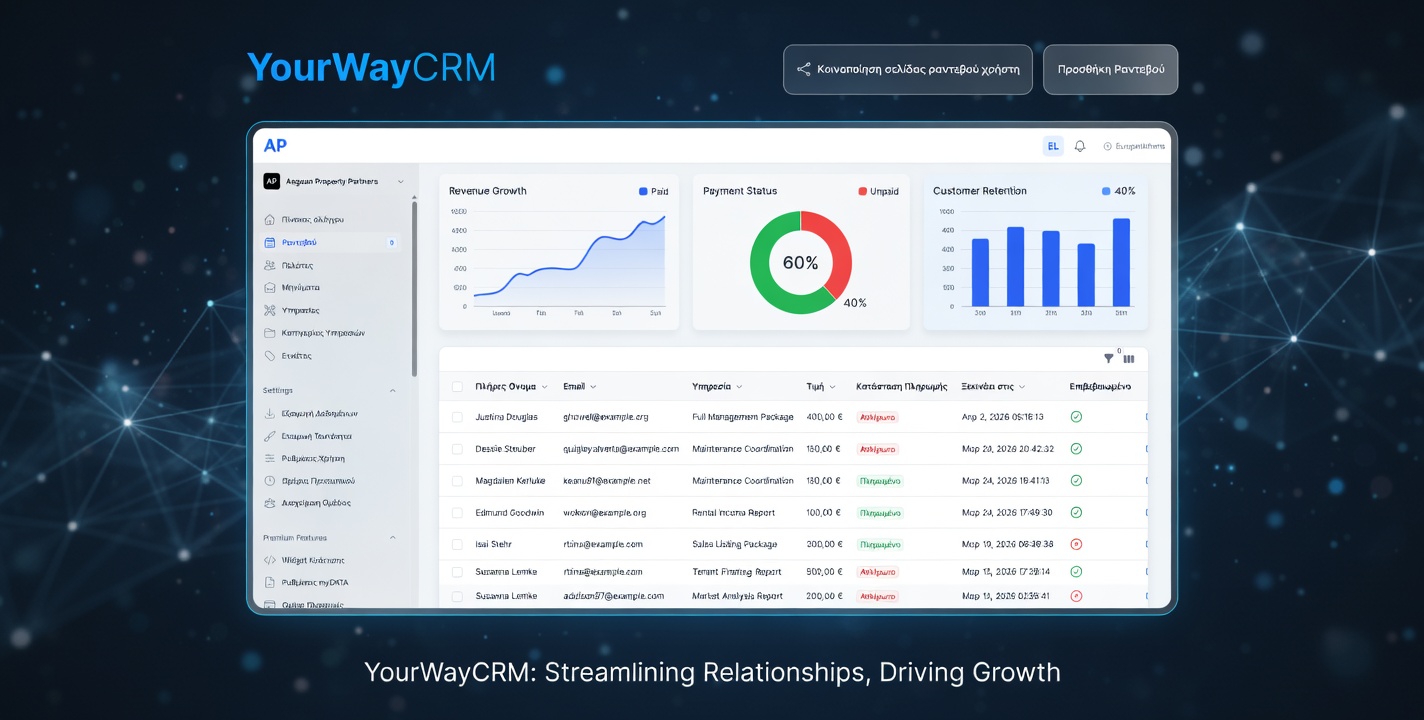
YourWayCRM makes sales forecasting straightforward with built-in reporting and pipeline visibility. You can easily track deals through each stage, monitor win rates, and generate forecasts without manual spreadsheet work. The platform's customizable pipeline stages let you align your CRM structure with your actual sales process, ensuring your forecasts reflect reality.
Common Forecasting Mistakes to Avoid
Even with good data, small business owners often make forecasting errors:
- Being too optimistic: Don't assume every deal will close. Use realistic win rates based on historical data.
- Ignoring pipeline health: A pipeline full of early-stage deals won't generate near-term revenue. Focus on deals likely to close soon.
- Neglecting external factors: Market conditions, competitor activity, and economic trends affect forecasts. Don't rely solely on internal CRM data.
- Setting it and forgetting it: Forecasts need regular updates. Review and adjust monthly based on actual pipeline movement.
- Mixing up forecast types: Understand the difference between best-case, realistic, and worst-case scenarios. Present all three to stakeholders.
Taking Action on Your Forecasts
The real value of sales forecasting isn't just knowing what revenue to expect—it's using those insights to improve performance. When your forecast shows a shortfall, dig into your CRM to find the problem. Are deals stalling in a particular stage? Are certain salespeople underperforming? Use your CRM data to identify issues and take corrective action.
Share forecasts with your team regularly. When salespeople understand how their pipeline activity translates into revenue predictions, they're more motivated to keep deals moving and close more business.
Conclusion
Sales forecasting doesn't have to be complicated. By leveraging the data already in your CRM, you can make accurate predictions that guide your business strategy. Start with clean data, establish your baseline metrics, and build a simple forecasting model. Review and refine monthly, and you'll have a forecasting process that actually works for your small business. Your CRM is the engine—now you know how to drive it toward better forecasting and stronger sales performance.