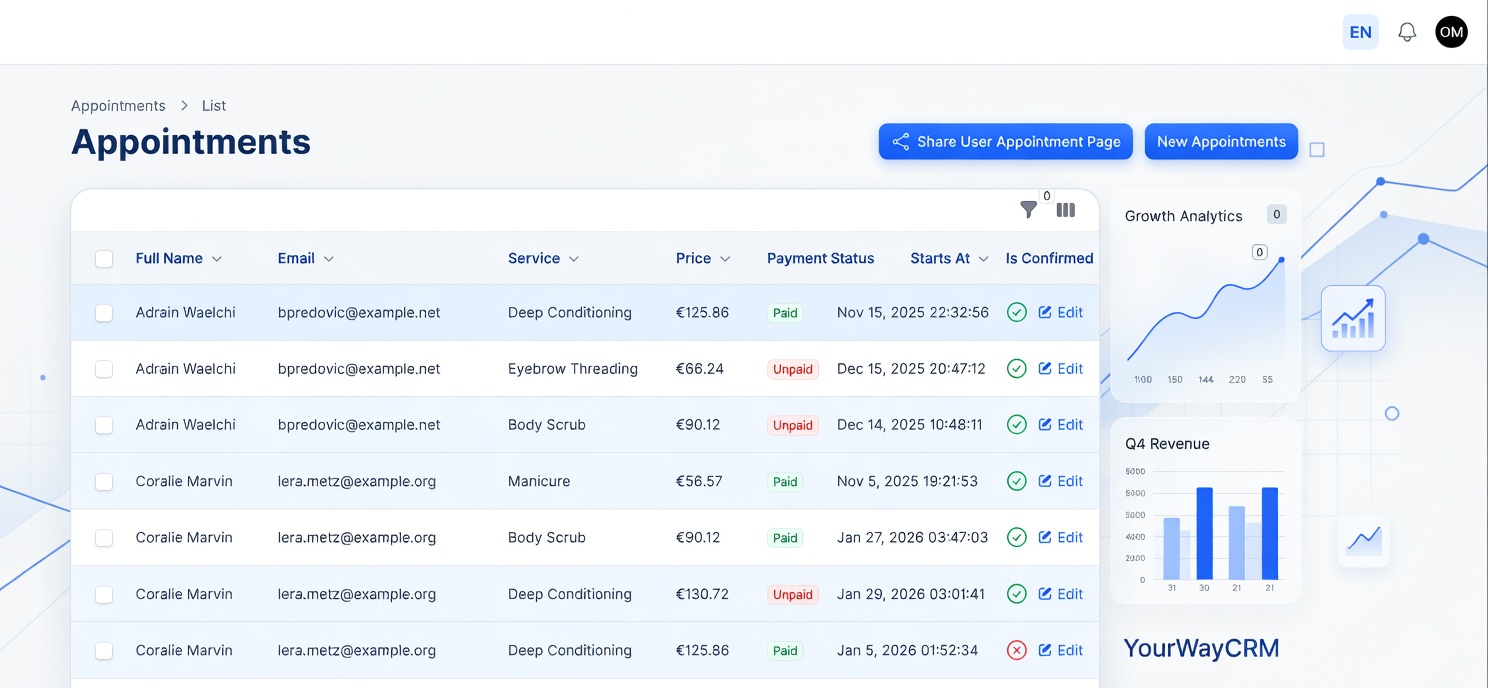
CRM's Critical Role in Subscription Business Models
Subscription-based business models have revolutionized how companies generate recurring revenue. Whether you're offering SaaS, membership services, or subscription boxes, the key to sustainable growth lies in understanding and nurturing your customer relationships. This is where a robust CRM system becomes essential. In this guide, we'll explore how CRM platforms like YourWayCRM help subscription businesses thrive by managing customer lifecycles, reducing churn, and maximizing lifetime value.
Understanding Subscription Business Challenges
Subscription models differ fundamentally from traditional sales approaches. Instead of one-time transactions, your success depends on retaining customers month after month, quarter after quarter. This shift requires a different mindset and different tools.
The primary challenge subscription businesses face is customer churn. Unlike traditional businesses where you acquire a customer once, subscription models require continuous engagement and value delivery. When customers don't perceive ongoing value, they cancel. A CRM system helps you track customer health, identify at-risk subscribers, and intervene before they leave.
How CRM Systems Support Subscription Models
1. Centralized Customer Data Management
A CRM platform consolidates all customer information in one accessible location. For subscription businesses, this means tracking:
- Subscription tier and renewal dates
- Usage patterns and feature adoption
- Payment history and billing information
- Support tickets and customer interactions
- Engagement metrics and communication history
With YourWayCRM, you can create a complete customer profile that shows the full picture of each subscriber's relationship with your business. This unified view enables better decision-making across your entire organization.
2. Churn Prediction and Prevention
One of the most valuable functions of a CRM in subscription businesses is identifying customers at risk of cancellation. By analyzing customer behavior patterns—such as decreased usage, support issues, or engagement decline—your CRM can flag at-risk subscribers before they leave.
Once identified, your team can take proactive steps: reach out with personalized offers, provide additional training, or address specific pain points. This intervention can be the difference between retaining a customer and losing them.
3. Personalized Customer Engagement
Subscription customers expect personalized experiences. A CRM allows you to segment your customer base by subscription level, usage patterns, industry, or any other relevant criteria. With these segments, you can:
- Send targeted communications based on customer needs
- Recommend relevant features or upgrades
- Provide timely educational content
- Offer customized renewal incentives
Personalization increases engagement and demonstrates that you understand your customers' unique needs, strengthening loyalty.
4. Revenue Expansion Opportunities
A CRM system helps identify upsell and cross-sell opportunities within your existing customer base. By analyzing usage data and customer success metrics, you can determine which customers would benefit from premium tiers, add-on features, or complementary services.
This approach is more cost-effective than acquiring new customers and increases customer lifetime value significantly. YourWayCRM makes it easy to track these opportunities and coordinate with your sales team to pursue them strategically.
Key CRM Features for Subscription Success
Automated Workflow Management
Subscription businesses benefit greatly from automation. A modern CRM automates routine tasks like renewal reminders, welcome sequences, and re-engagement campaigns. This frees your team to focus on high-value activities like customer success and strategic growth.
Integration with Billing Systems
Your CRM should seamlessly integrate with your billing and payment platforms. This integration ensures that subscription data, payment status, and renewal information are always synchronized. When billing information is out of sync with your CRM, you risk missed opportunities and customer frustration.
Reporting and Analytics
Subscription metrics like monthly recurring revenue (MRR), customer lifetime value (CLV), and churn rate are critical to business health. A CRM with robust reporting capabilities provides visibility into these metrics, helping you make data-driven decisions about resource allocation and strategy.
Customer Communication Tracking
Every interaction with a customer matters in a subscription model. Your CRM should track all communications—emails, calls, support tickets, and meetings. This ensures continuity and allows any team member to understand the customer's history and current needs.
Best Practices for Subscription CRM Implementation
To maximize the value of your CRM in a subscription business, follow these best practices:
- Define your metrics: Establish which metrics matter most to your business and ensure your CRM tracks them consistently.
- Segment strategically: Create meaningful customer segments that align with your business goals and enable targeted strategies.
- Maintain data quality: Regular data audits ensure your CRM information remains accurate and actionable.
- Integrate fully: Connect your CRM with other business tools to create a seamless workflow.
- Train your team: Ensure all team members understand how to use the CRM effectively and why it matters.
- Monitor key metrics: Regularly review churn rate, MRR, CLV, and other subscription-specific metrics to identify trends and opportunities.
The Bottom Line
In subscription business models, customer retention is as important as customer acquisition—often more so. A CRM system like YourWayCRM provides the foundation for managing customer relationships at scale, predicting churn, personalizing engagement, and identifying growth opportunities.
By implementing a CRM tailored to subscription business needs, you gain visibility into customer health, enable proactive retention strategies, and create a customer-centric culture throughout your organization. The result is stronger customer relationships, reduced churn, and sustainable revenue growth.
If you're running a subscription business and haven't yet implemented a CRM, now is the time. The competitive advantage of understanding and serving your customers better is too significant to ignore.